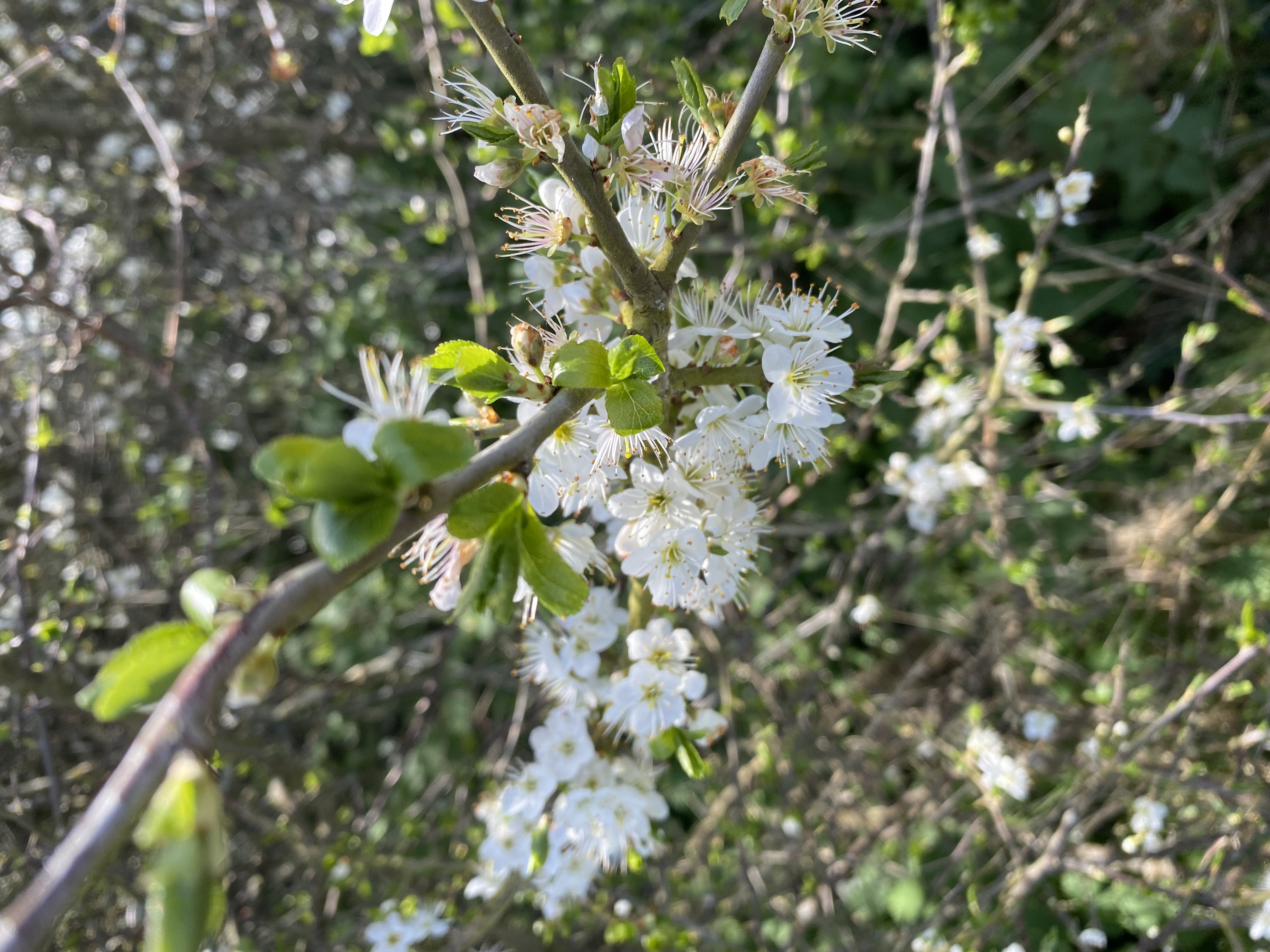
Blackthorn
Prunus spinosa
Blossom here(Isle of Wight) in early April.
Blackthorn is one of the great characters of the British hedgerow: dark, densely tangled and armed with formidable thorns. Its delicate white flowers appear before the leaves in early spring, making the otherwise rather forbidding shrub briefly look as though it has been dusted with snow.
In autumn it produces sloes—small, blue-black fruits with an impressively sharp, mouth-drying taste when eaten raw. They are traditionally used for jellies, syrups and, most famously, sloe gin.
The gin angle certainly intrigues me, although my doctor has suggested that I give up drinking and never do it again. This remains a work in progress—by which I mean I have not actually stopped at all. A sloe-gin recipe may nevertheless belong here, even if only for botanical and historical purposes.
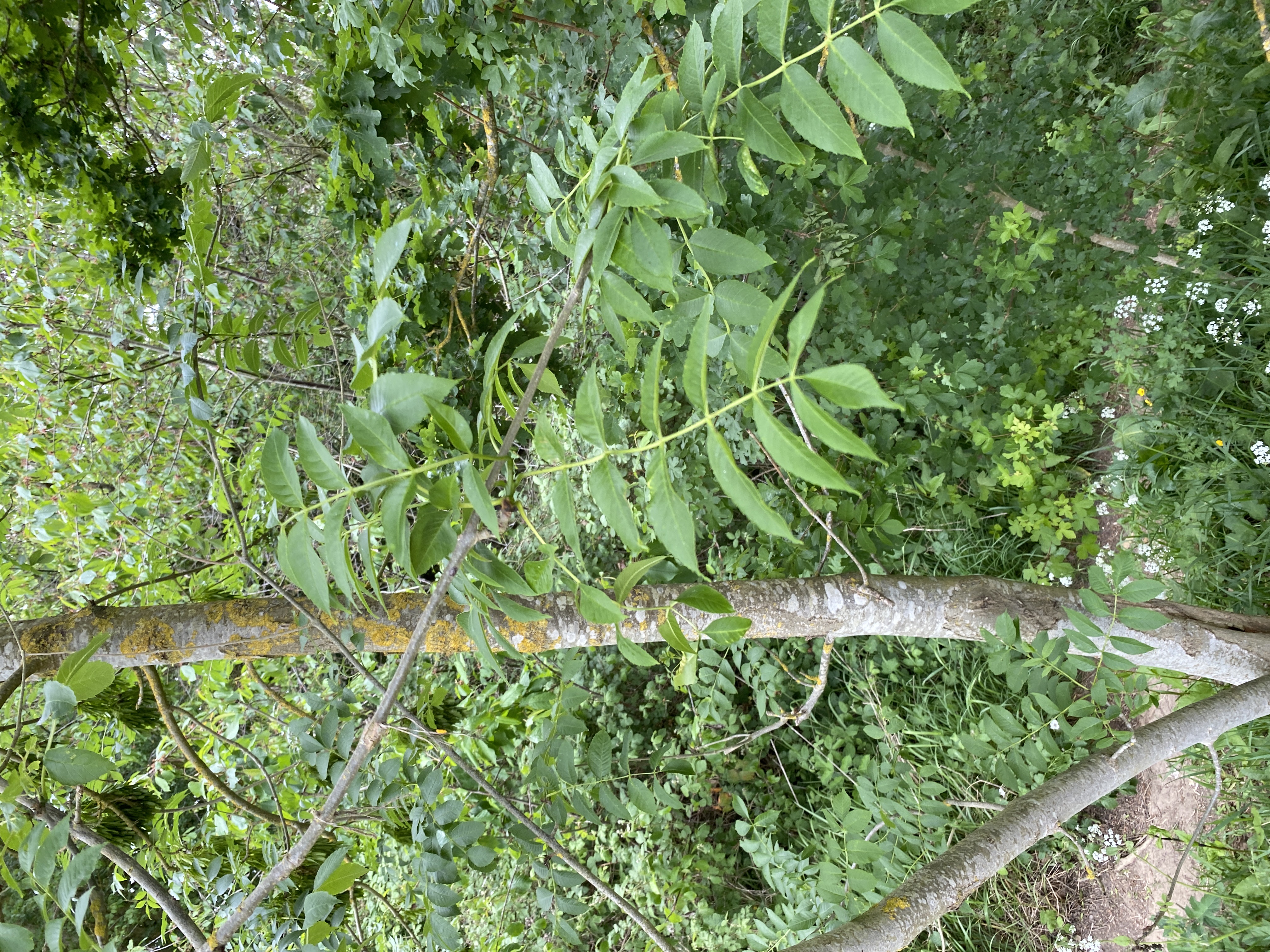
Common Ash
Fraxinus excelsior
Common ash is one of Britain’s tallest and most graceful native trees. Its pinnate leaves consist of opposite pairs of leaflets with a single terminal leaflet at the end. In winter it is easily recognised by its distinctive velvety-black buds, the terminal bud often shaped rather like a bishop’s mitre.
Clusters of purple flowers appear before the leaves in spring, followed by bunches of winged seeds known as keys. The leaves are among the last to open in spring and often fall while still green in autumn.
Sadly, ash trees across Britain are now seriously threatened by ash dieback. This specimen was originally recorded as “Mountain ash”—an entirely different tree—and supplied with the cryptic field note “Mitral buds, terminal leaflets.” Even the trees website occasionally requires differential diagnosis.
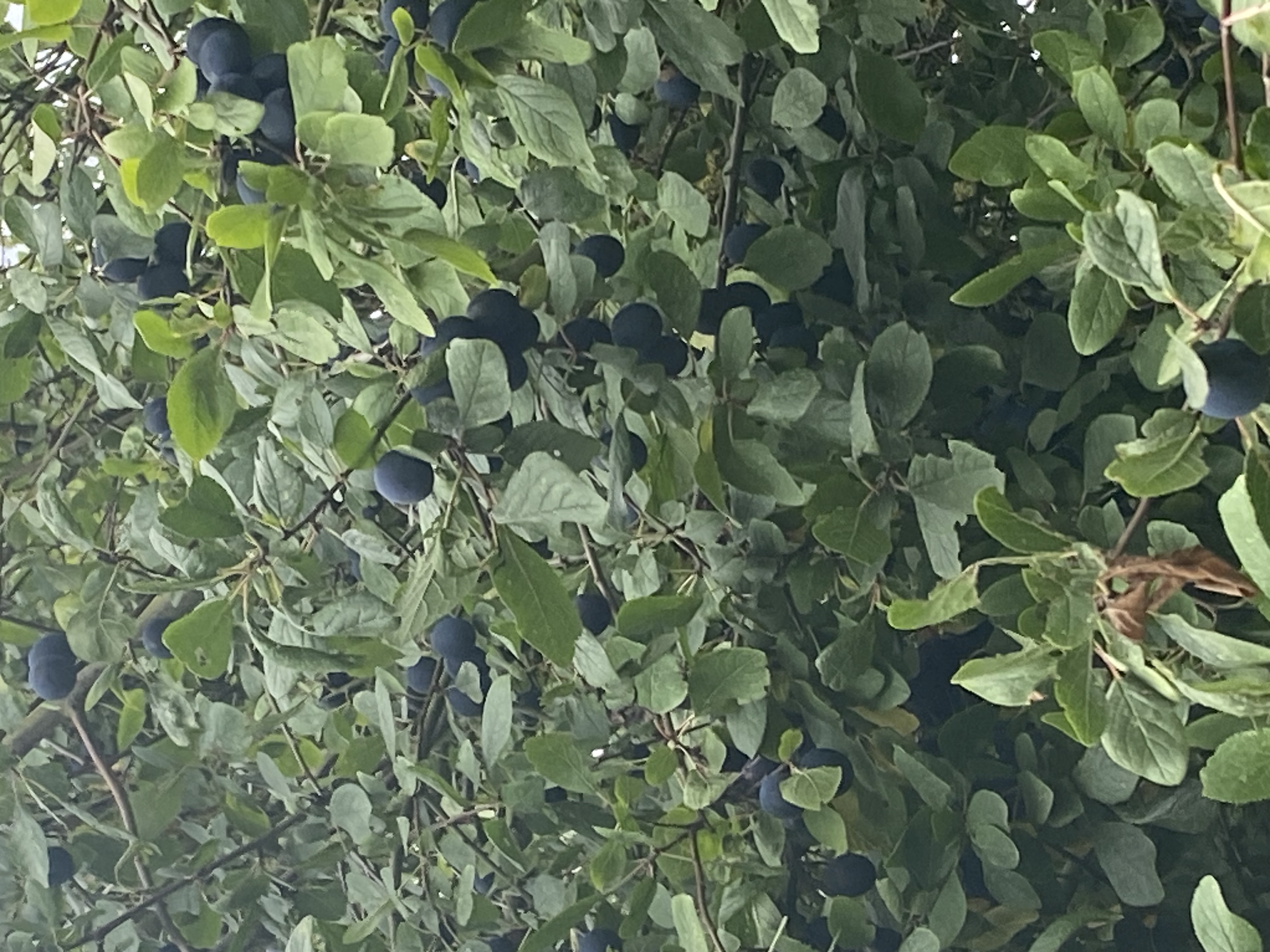
Damson
Prunus insititia
The damson is a small, hardy member of the plum family, producing clouds of white blossom in spring followed by dark blue-purple fruit in late summer and early autumn. The fruit is rather sharp eaten straight from the tree but comes into its own when cooked, making excellent jams, jellies, crumbles and—perhaps most importantly—damson gin.
Baz is particularly fond of making damson jam. I have made it too, although, as somebody who never actually eats jam, the exercise seems increasingly difficult to justify. Several jars of hedgerow jam or jelly have now been sitting in our kitchen for two or three years, quietly maturing into family heirlooms.

Dawn Redwood
Metasequoia glyptostroboides
Ancient • Deciduous Conifer
This is a specimen I bought for my sister, currently living just outside Larne in Northern Ireland. For rather longer than anticipated, it remained resolutely unplanted despite my gentle encouragement that a potentially enormous prehistoric tree might eventually appreciate having some actual ground to grow in.
Thankfully, I harboured absolutely no resentment about this whatsoever.
Dawn redwood is a remarkable tree. Known originally only from fossils, it was thought to have been extinct for millions of years until living trees were discovered in China in the 1940s. Seeds were subsequently distributed around the world, making it one of the great botanical rediscoveries of the twentieth century.
Unlike most conifers, dawn redwood is deciduous. Its soft, feathery green foliage turns warm copper and russet in autumn before falling, leaving the tree bare through winter. Given enough space, it can eventually become a magnificent tree more than 30 metres tall.
Update, November 2025: The tree has been planted out!
All resentment, which definitely never existed, is now officially resolved.
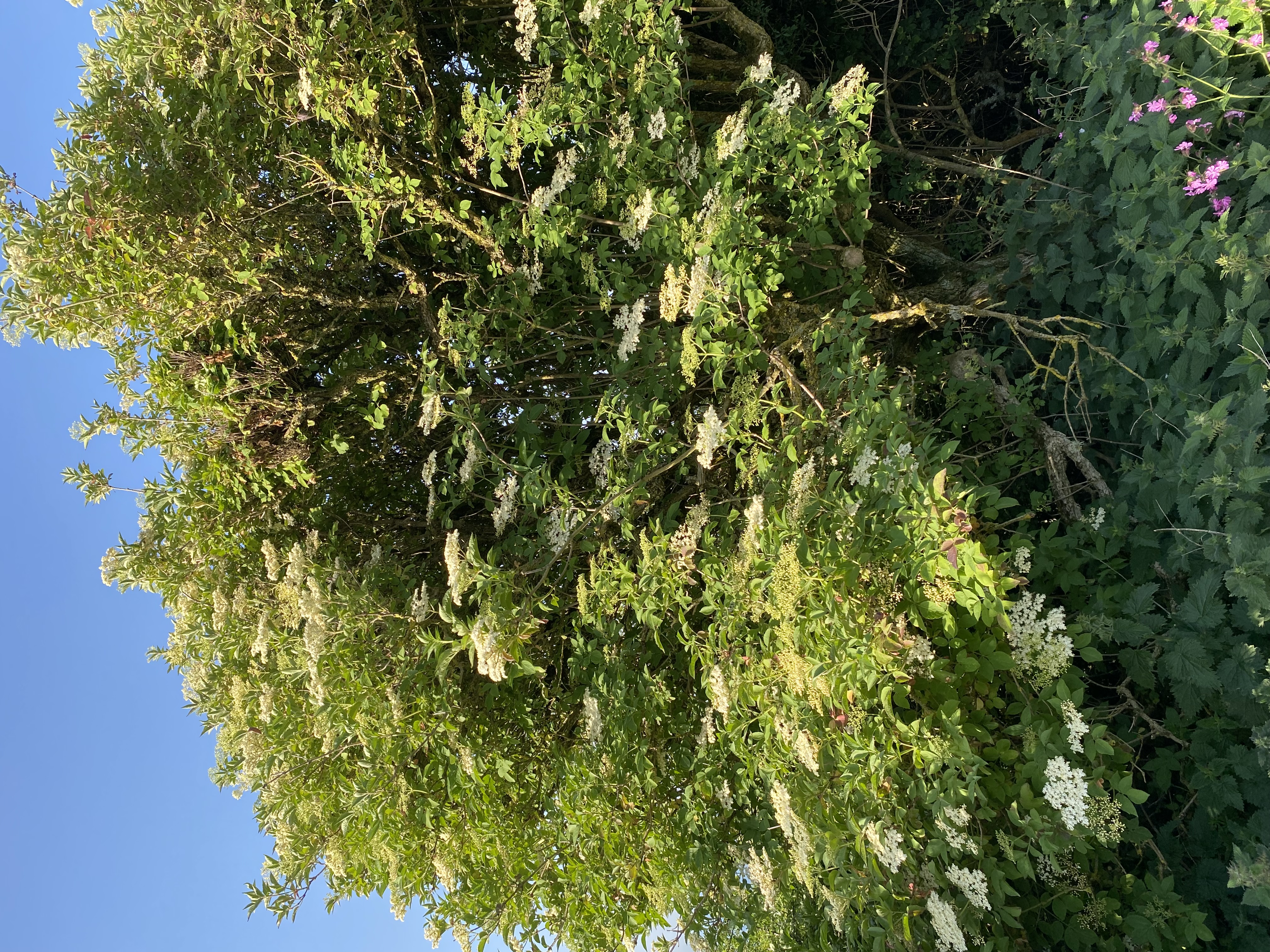
Elder
Sambucus nigra
Elder
Sambucus nigra
Native • Edible
Feared by the devil. Favoured by foragers. Elder is the very essence of summer, with clouds of fragrant, creamy-white flowers followed by clusters of soot-dark berries.
Few British trees carry such a rich mixture of food, folklore and superstition. Elderflowers have long been gathered for cordials, wines, syrups and fritters, while the ripe berries are traditionally cooked into jellies, preserves and wine. The leaves, bark, stems and unripe berries should not be eaten.
Elder was once considered a powerful protective tree. Planting one beside the house was said to keep away evil spirits, witchcraft and even the Devil himself. Yet the tree demanded respect. Folklore warned against cutting an elder without permission or burning its wood in the home.
Some traditions believed the tree was inhabited by the Elder Mother, a protective spirit who could punish anyone who damaged her tree carelessly. Sleeping beneath an elder was also considered risky. You might encounter fairies, spirits or other inhabitants of the unseen world.
Christian legends later became entwined with the older folklore. Elder was said to be the tree from which Judas Iscariot hanged himself, although there is no historical basis for the story. Curiously, the ear-shaped fungus known as Judas’s ear is particularly fond of growing on elder wood.
Its soft-centred young branches can be hollowed easily and were once made into whistles, pipes and children’s pea-shooters.
Common, untidy and easily overlooked, elder is one of the great characters of the British hedgerow. A source of food, drink, medicine, music and superstition, it has been living alongside us for centuries.

English Oak
Quercus robur
Few trees are more deeply rooted in the British landscape and imagination than the English oak. Its broad, spreading crown, deeply lobed leaves and acorns carried on long stalks make it one of our most recognisable native trees.
English oaks can live for many centuries, becoming increasingly valuable to wildlife as they age. Their bark, canopy, hollows and dead wood provide food or shelter for more than 2,300 species, including insects, birds, mammals, fungi, mosses and lichens.
A traditional symbol of strength and endurance, oak timber has been used for everything from houses and furniture to ships. As British trees go, this one was entitled to rather more than two sentences.
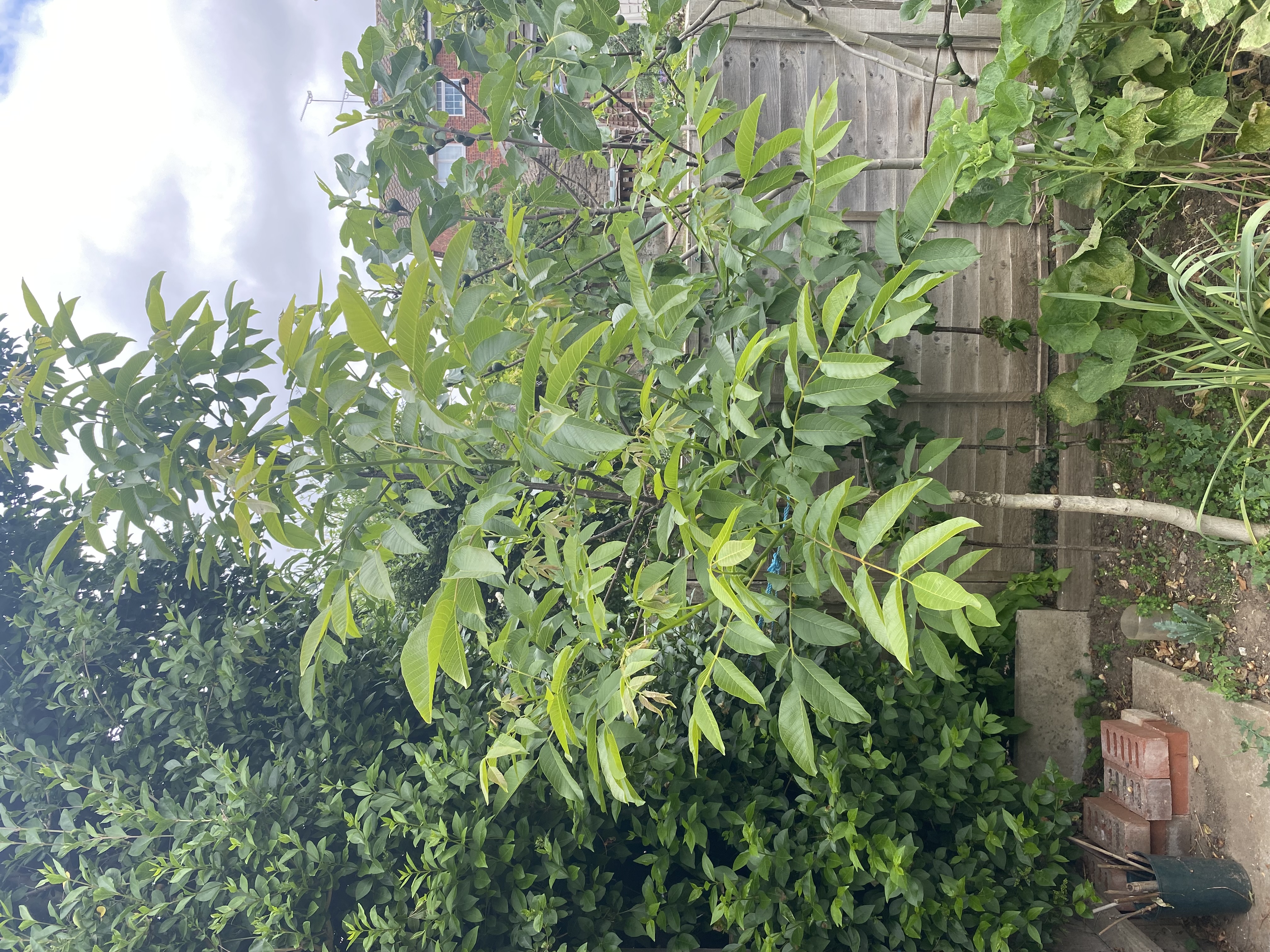
English Walnut
Juglans regia
Juglans regia (Common/English Walnut) – Tree Notes
Identification:
• Leaves: Pinnate (feather-like), with 5–9 large, oval leaflets per leaf; aromatic when crushed
• Bark: Pale grey, becoming deeply ridged with age
• Growth habit: Upright and spreading canopy as it matures
• Fruit (not yet visible): Round green husk encasing a hard-shelled walnut
Growth & Conditions:
• Height: Can reach 15–35m at maturity
• Growth rate: Moderate to fast
• Sunlight: Full sun required for good nut production
• Soil: Deep, well-drained, loamy soils preferred; pH neutral to alkaline
Maintenance:
• Pruning: Best done in summer (July–August) to avoid bleeding sap
• Feeding: Avoid high nitrogen – this can reduce nut production
• Spacing: Needs room to grow; avoid planting close to buildings or other trees
Notes on Cultivation:
• Begins producing nuts after 5–10 years, depending on variety and rootstock
• Some juglone production in roots may inhibit nearby plants (e.g. tomatoes, apples, some flowers)
• Highly valued for both nuts and timber
Potential Issues:
• Pests/Disease: Aphids, walnut leaf blotch, codling moth
• Late frost damage: Especially to spring growth or catkins
• Squirrel damage: Common in UK gardens
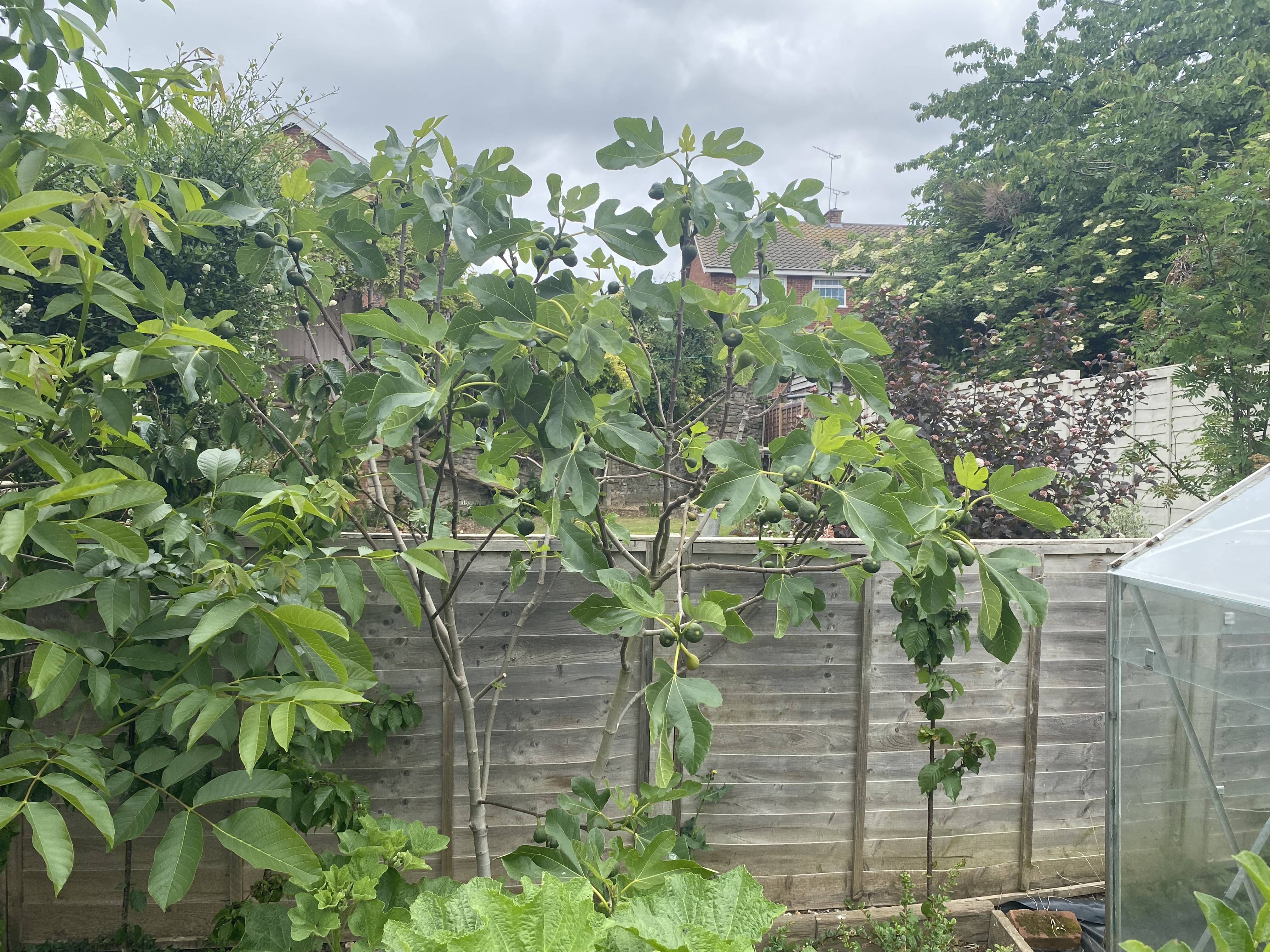
Fig tree
Ficus carica
The common fig is a small, spreading deciduous tree with large, deeply lobed leaves and fruit which ripens from green to purple or brown. What we call a fig is not strictly a single fruit but a hollow structure containing many tiny flowers—a remarkably complicated arrangement for something so pleasant to eat.
Figs enjoy a warm, sheltered position, ideally against a sunny wall. Curiously, restricting their roots can improve fruit production by discouraging excessive leafy growth. Watering during dry spells helps the developing fruit, but generous nitrogen feeding tends to produce magnificent leaves and rather fewer figs.
I once used some cut fig twigs to mark the rows where I had sown broad beans. As the beans germinated, the supposedly inanimate row markers also began producing leaves. I had successfully marked the beans and, quite unintentionally, started propagating more fig trees. Win-win.

Horse Chestnut
Aesculus hippocastranum
Mature horse chestnut trees grow to a height of around 40m and can live for up to 300 years. The bark is smooth and pinky-grey when young, which darkens and develops scaly plates with age. Twigs are hairless and stout; buds are oval, dark red, shiny and sticky.
Look out for: conkers (seeds) which are surrounded by a spiky green case. Distinctive large leaves have serrated leaflets.
Identified in winter by: twigs which have large, sticky red buds. These fall during spring and land on your car if you have unwittingly parked beneath one. Your cars paintwork will not thank you for this.
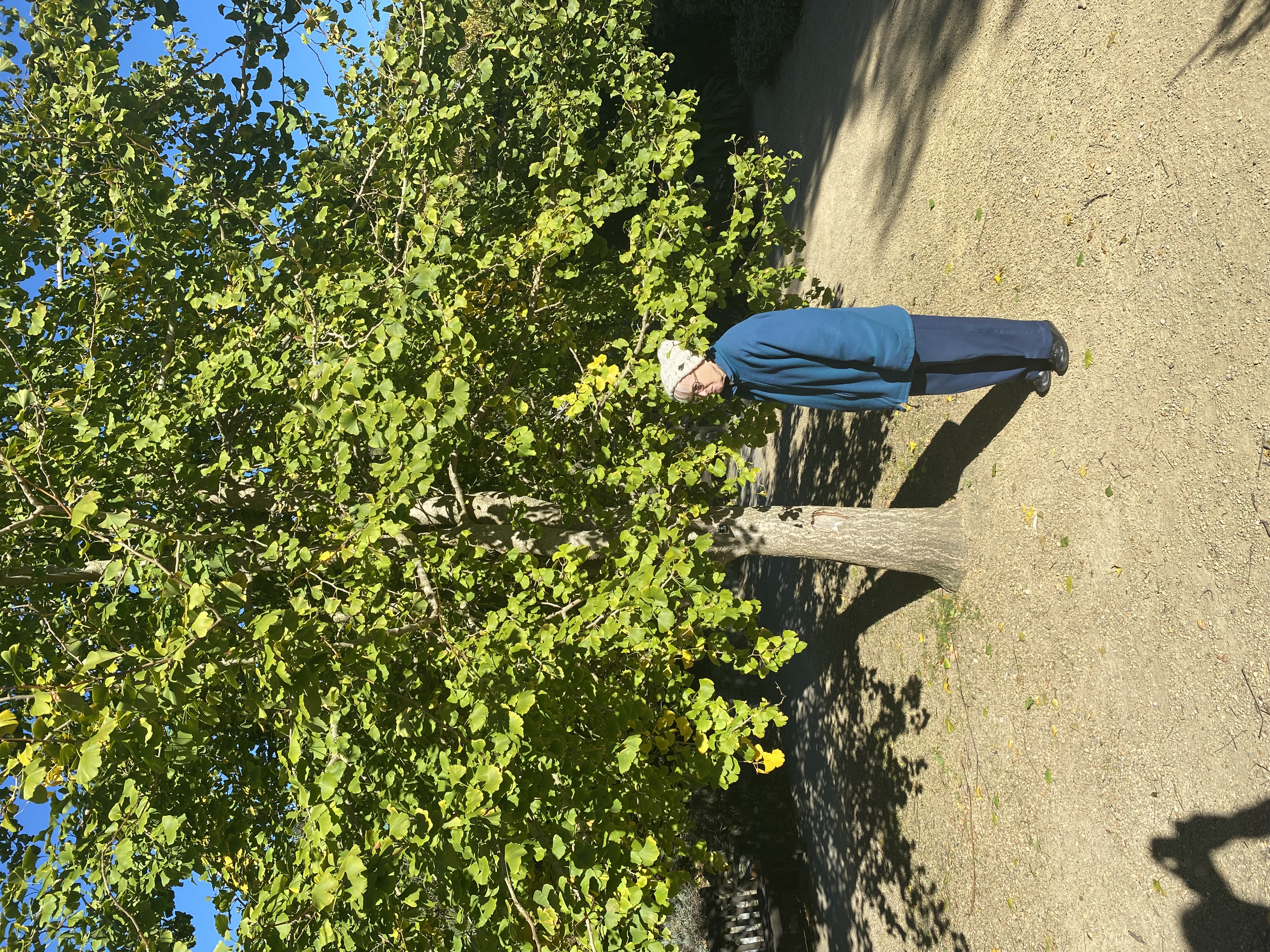
Maidenhair tree
Ginkgo biloba
The maidenhair tree is often described as a living fossil. Its ancestors were growing more than 200 million years ago, and *Ginkgo biloba* is now the sole surviving species of an otherwise ancient group of trees. Its distinctive fan-shaped leaves turn a magnificent golden yellow in autumn, often dropping within a remarkably short period to form a bright carpet beneath the tree.
Ginkgos are exceptionally long-lived and remarkably tolerant of pollution, disease and difficult urban conditions. Female trees produce fleshy fruits with a notoriously unpleasant smell, so male trees are generally preferred for street planting.
This fine specimen was photographed at Ventnor Botanic Garden, with Clare’s mum, Brenda, kindly providing a sense of scale.
Oriental plane
Planus Orientalis
The Tree of Hippocrates, under which Hippocrates — the "Father of Medicine" — taught at Kos, is reputed to have been an oriental plane. A 500-year-old tree presently there may be on the same site and may have been planted from a succession of cuttings from the original. The Athenian Academy, outside Athens, featured a sacred grove of planes where the students listened to the masters and where among others the Peripatetics practiced philosophy.
Many villages in Greece feature plane trees in their main squares, frequently found alongside them are water springs that in the past would serve as the main water source for the villagers; usually these are quite old trees with their age seen as a point of pride for the local inhabitants. Occasionally the oldest trees exhibit partially hollowed out trunks, with cavities large enough to provide amusement opportunities for local or visiting children and teenagers, and even serving (along with the rest of the tree) as tourist attractions or at least in one occasion a shrine.
.jpeg)
Persian Ironwood
Parrotia persica
Persian ironwood is a slow-growing deciduous tree native to northern Iran and Azerbaijan. It is especially prized for its spectacular autumn foliage, when the leaves develop shades of yellow, orange, crimson and purple—often all at once. Small red flowers appear on the bare branches in late winter, while older trees develop attractive flaking bark in patches of grey, cream and brown. Its common name refers to its exceptionally hard, dense timber.
This specimen grows in the grounds of St Mary’s Church in Ipswich and was identified for me by Tony, who tends the gardens there. Tony is usually accompanied by Skipper, a cantankerous terrier, and the considerably more endearing puppy Jerico.
Tony describes his activities as gardening. Those wishing to be both diplomatic and fashionable might prefer the term “rewilding.”
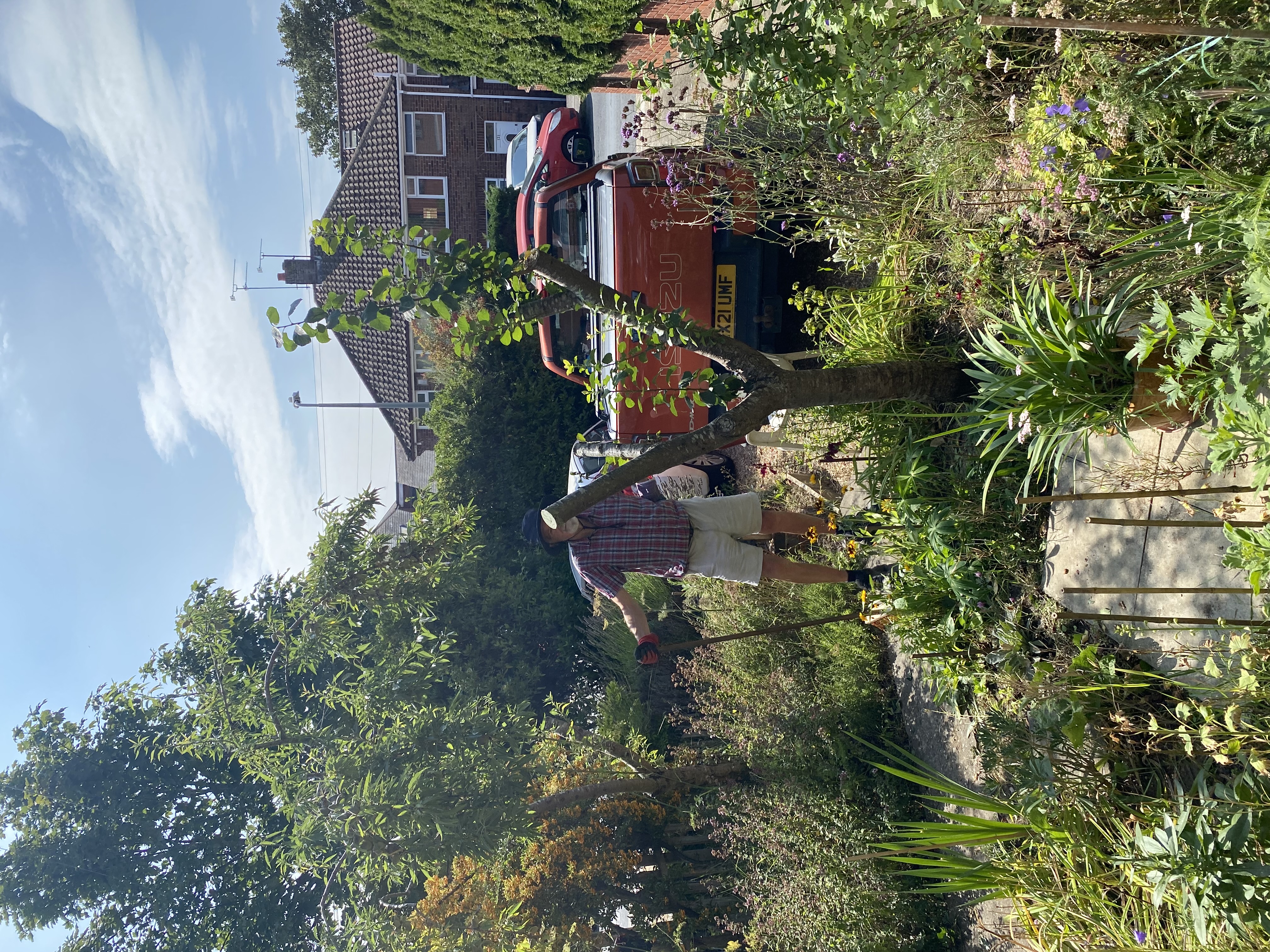
Plum
Prunus domestica
The common plum is a small deciduous tree, producing white blossom in spring followed by sweet, juicy fruit in late summer or early autumn. Plums come in an extraordinary range of colours, from green and golden yellow to red, purple and almost black. They can be eaten straight from the tree or used in pies, crumbles, preserves and—inevitably—yet more jam.
Barrie pollarded his plums on 24 August 2025. Barrie’s head appears in the photograph as an improvised but surprisingly effective indication of scale.
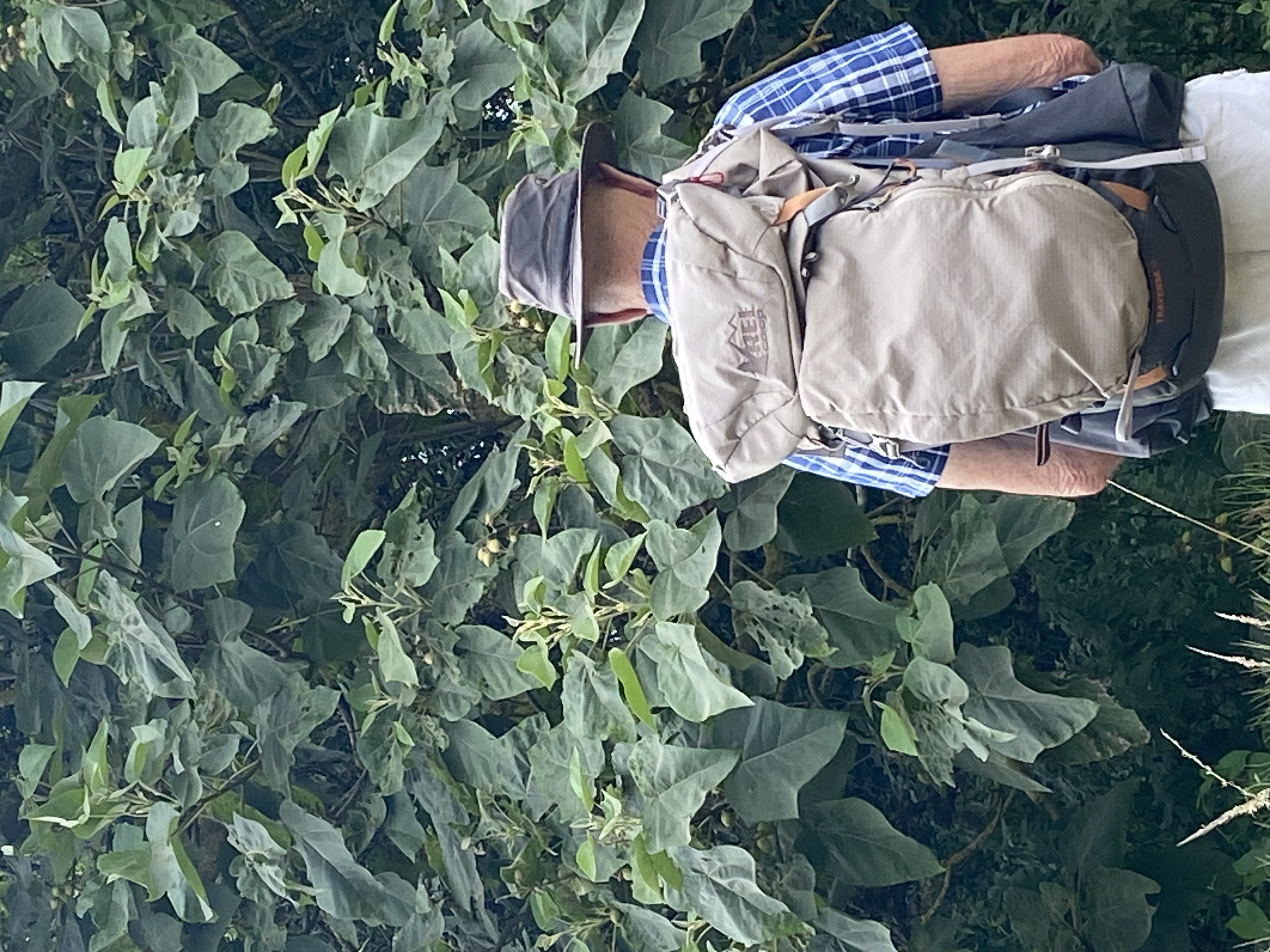
Princess tree, Foxglove tree
Paulownia tomentosa
The princess tree is a fast-growing deciduous tree from China which does very little by halves. It produces enormous, softly hairy, heart-shaped leaves, giving it an almost tropical appearance. Mature trees bear upright clusters of fragrant, pale lilac flowers in spring, shaped rather like foxgloves—hence one of its common names.
It can eventually reach a considerable size, although coppicing or pollarding encourages even larger leaves at the expense of the flowers. Barrie is pictured here providing scale and appearing to approach the specimen with appropriate caution.
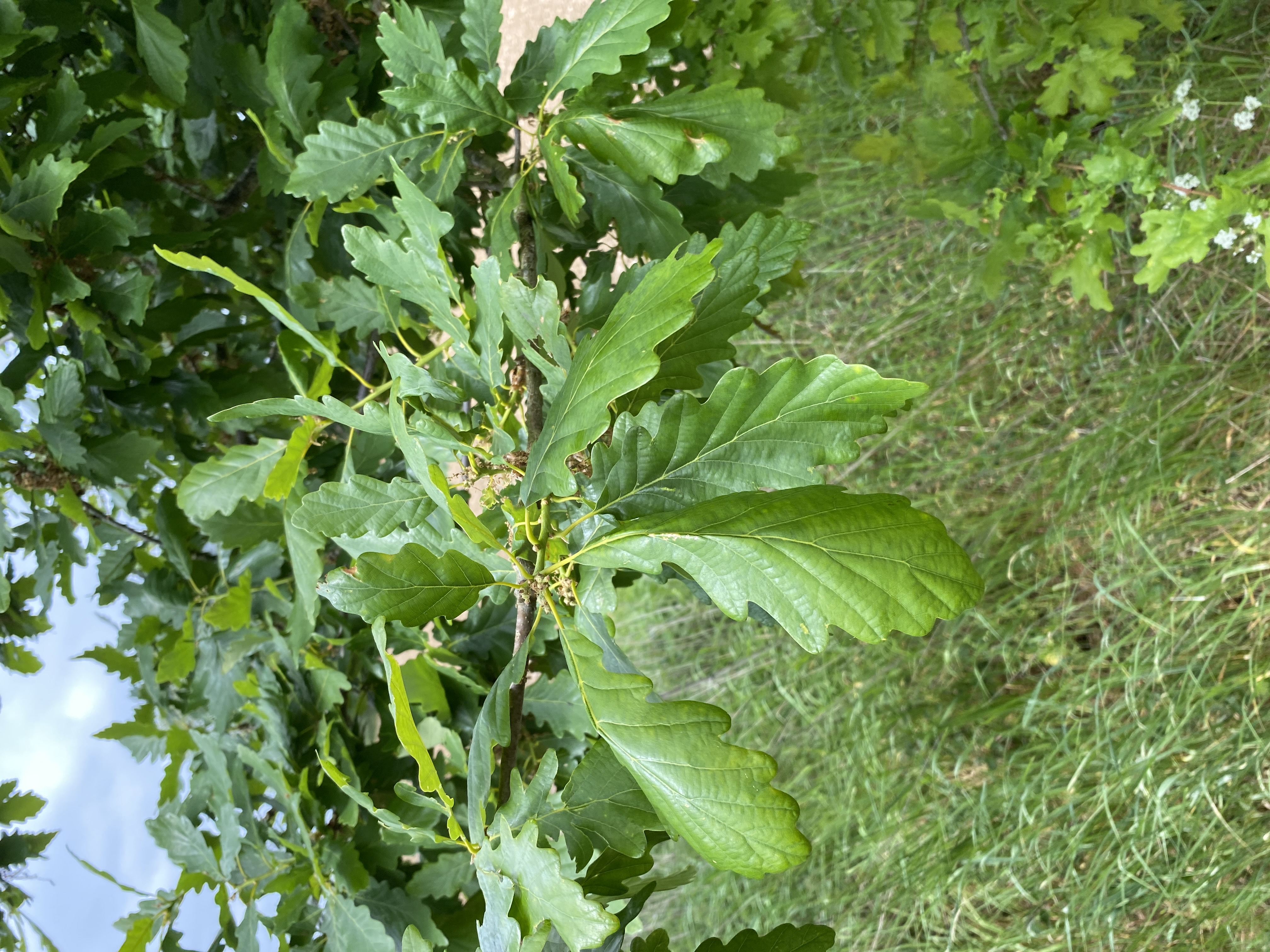
Sessile Oak
Quercus petraea
Mythology and symbolism
The oak was sacred to many gods including Zeus, Jupiter and the Celtic Dagda. Each of these gods ruled over thunder and lightning, and oak trees are often hit by lightning as they are the tallest living feature in the landscape.
Druids practised rituals in oak groves and cherished the mistletoe that grows in oak tree branches. It’s also linked with royalty: ancient kings and Roman Emperors wore crowns of oak leaves.
In England, the oak is a national symbol of strength. Couples were wed under ancient oaks in Oliver Cromwell’s time. Oak is the emblem of many environmental groups, including the Woodland Trust.
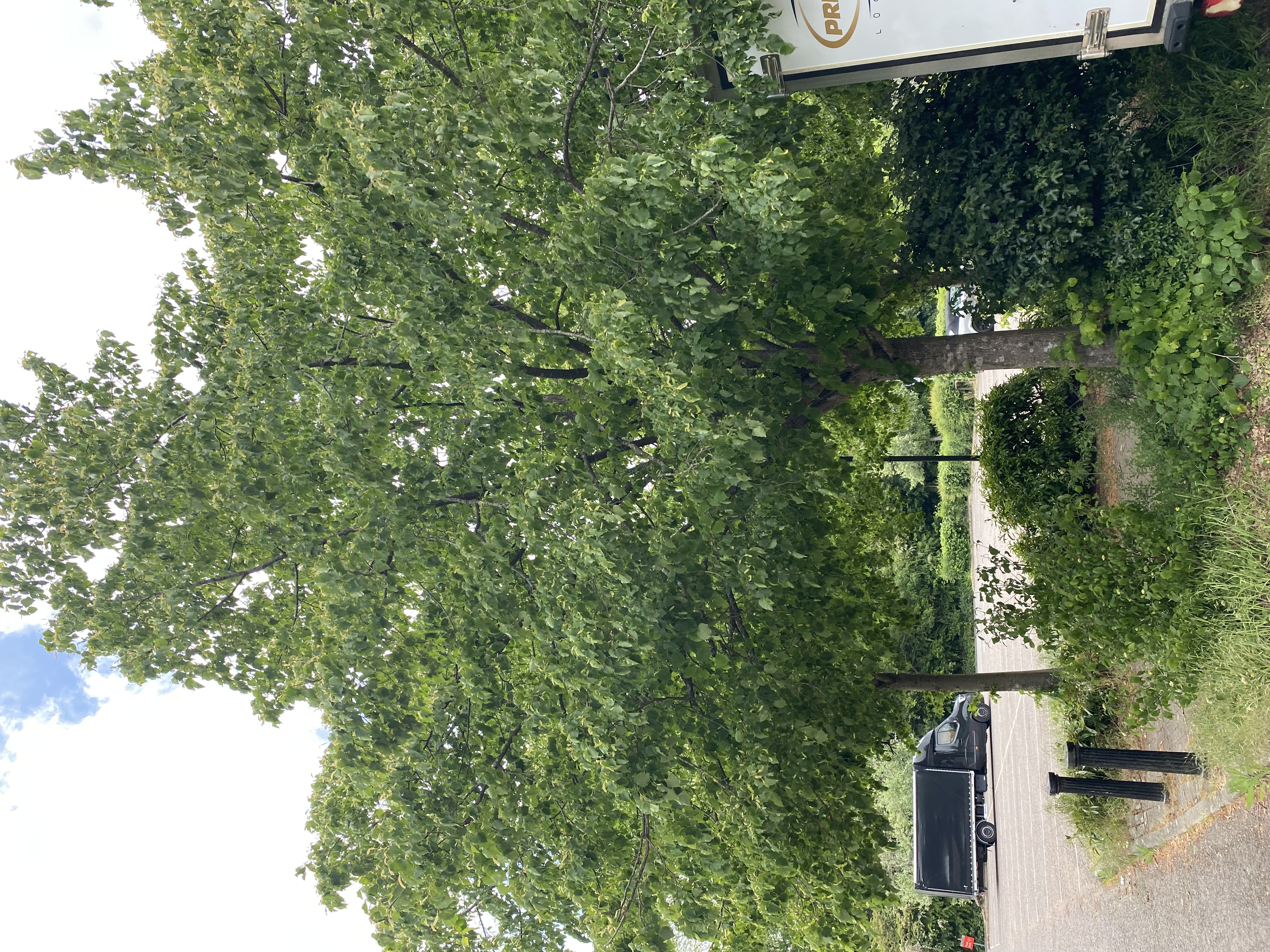
Small leaved lime
Tilia cordata
Despite its name, the small-leaved lime has no connection with the citrus fruit. It is a handsome native tree with glossy, heart-shaped leaves and small, fragrant, creamy-yellow flowers which attract great numbers of bees in midsummer.
It was once a dominant tree in British woodland but is now much less common. In some parts of England, its presence can indicate ancient woodland—although this particular specimen had chosen the rather less ancient surroundings of Clacket Lane Services on the M25.
Proof, perhaps, that even one of Britain’s most distinguished native trees can occasionally find itself somewhere it would rather not be.
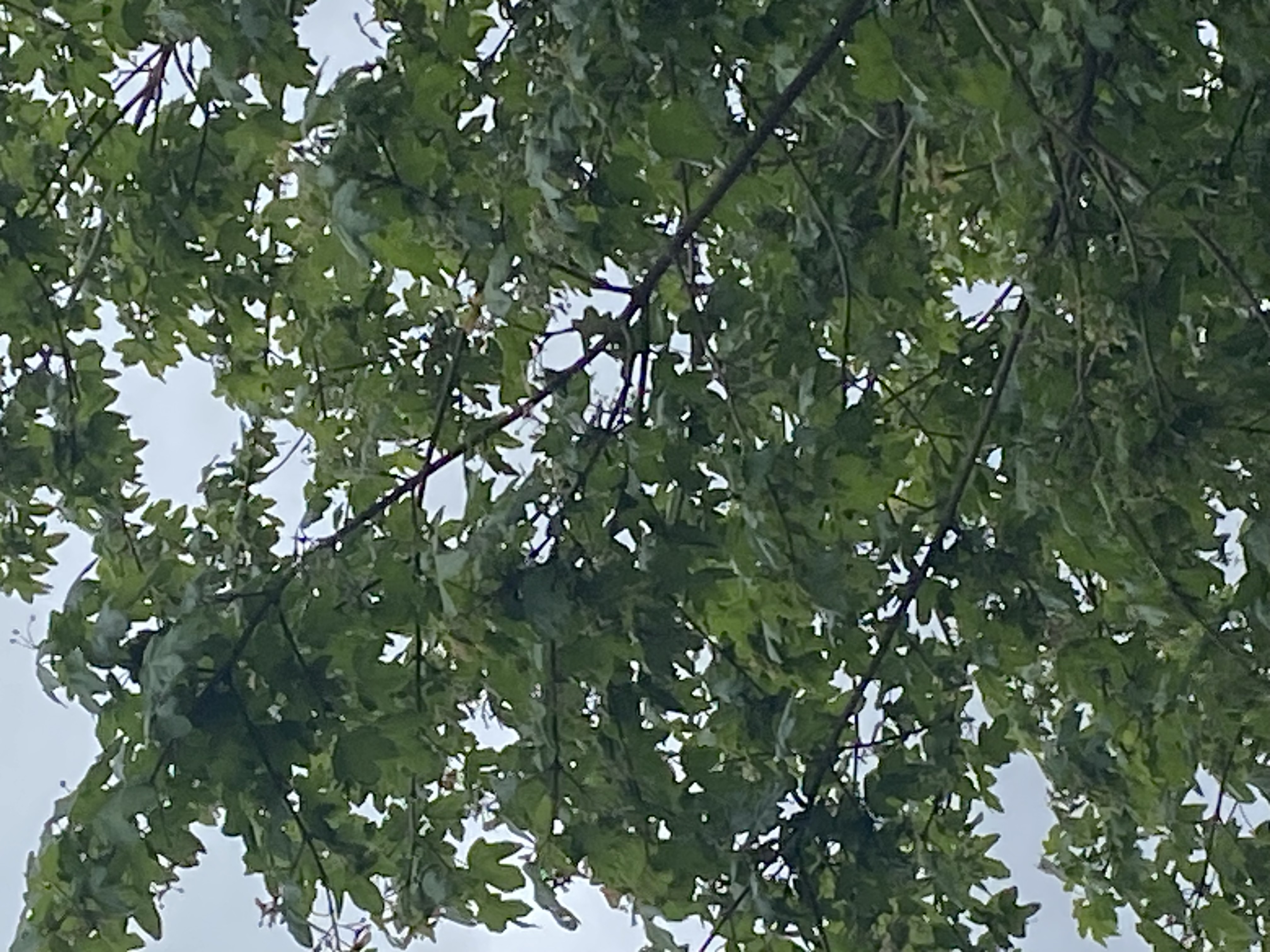
Sycamore
Acer pseudoplatinus
Acer pseudoplatanus – Sycamore Maple
Botanical Profile:
• Common name: Sycamore (not to be confused with American sycamore)
• Scientific name: Acer pseudoplatanus
• Family: Sapindaceae
• Origin: Native to Central and Southern Europe; naturalised across the UK
• Type: Deciduous broadleaf tree
Key Characteristics:
• Height/Spread: Up to 35m tall; broad domed canopy
• Leaves: 5-lobed, dark green with serrated edges; paler and downy underneath
• Flowers: Small green-yellow, in drooping panicles (spring)
• Fruit: Paired winged seeds (samaras), dispersed by wind
• Bark: Smooth grey when young; flakes into plates with age
Ecological and Practical Value:
• Pollinators: Nectar source for bees
• Timber: Pale, fine-grained wood used in musical instruments and furniture
• Resilience: Tolerates pollution, wind, salt spray — often planted in exposed areas
Issues:
• Invasiveness: Can self-seed prolifically
• Sap dripping: Often hosts aphids which produce honeydew, leading to sticky surfaces
• Not a native species – debated ecological value in ancient woodland settings
⸻
Historic Note: The Tolpuddle Martyrs’ Tree
Historical Significance:
• Location: Tolpuddle, Dorset, England
• Event: Six farm labourers formed a friendly society in 1834 to protest poor wages; transported to Australia as punishment under laws against secret oaths
• Tree type: The Tolpuddle Sycamore – a mature Acer pseudoplatanus – marks the place where the men are said to have met
Legacy:
• The tree stands as a living memorial to trade unionism and workers’ rights
• Each year, the Tolpuddle Martyrs Festival celebrates this history, with the tree as a symbolic backdrop
Cultural Status:
• Sometimes referred to as “the most famous tree in trade union history”
• Protected and celebrated by labour organisations and heritage groups
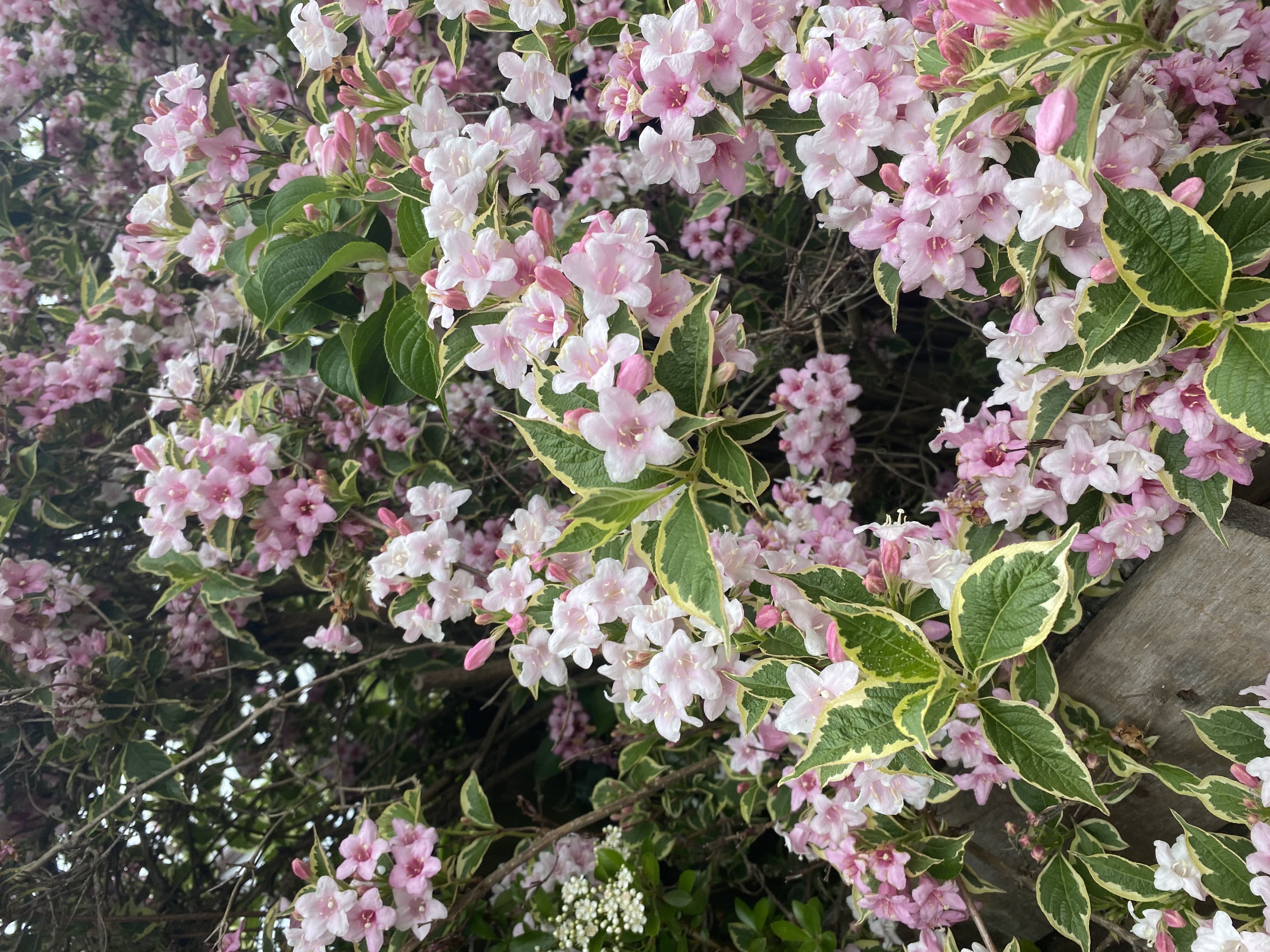
Weigela
Weigela florida
Weigela florida – Notes
Overview:
• Scientific name: Weigela florida
• Family: Caprifoliaceae (honeysuckle family)
• Origin: Native to northern China, Korea, and Japan
• Type: Deciduous shrub
Key Features:
• Height/Spread: Typically 1.5–2.5m tall and wide
• Growth habit: Upright to arching, dense form
• Leaves: Oval, mid-green, 5–10 cm, opposite arrangement
• Flowers: Trumpet-shaped, 2–4 cm long, usually pink but cultivars range from white to deep red
• Bloom time: Late spring to early summer, with occasional repeat blooms in late summer
Conditions:
• Light: Prefers full sun for best flowering; tolerates partial shade
• Soil: Well-drained, moderately fertile soil; pH neutral to slightly acidic
• Water: Moderate water needs; drought tolerant once established
Uses:
• Ornamental borders, informal hedging, pollinator-friendly gardens
• Attracts bees, butterflies, and hummingbirds (in suitable climates)
Maintenance:
• Pruning: Prune immediately after flowering to maintain shape and encourage new growth
• Pests/Diseases: Generally pest-free; occasional aphids or powdery mildew
Popular Cultivars:
• ‘Variegata’ – variegated cream-edged foliage, pink flowers
• ‘Wine and Roses’ – deep purple foliage, rosy-pink flowers
• ‘Bristol Ruby’ – vigorous, ruby-red blooms
Noteworthy:
• RHS Award of Garden Merit recipient (various cultivars)
• Excellent choice for low-maintenance, long-season colour
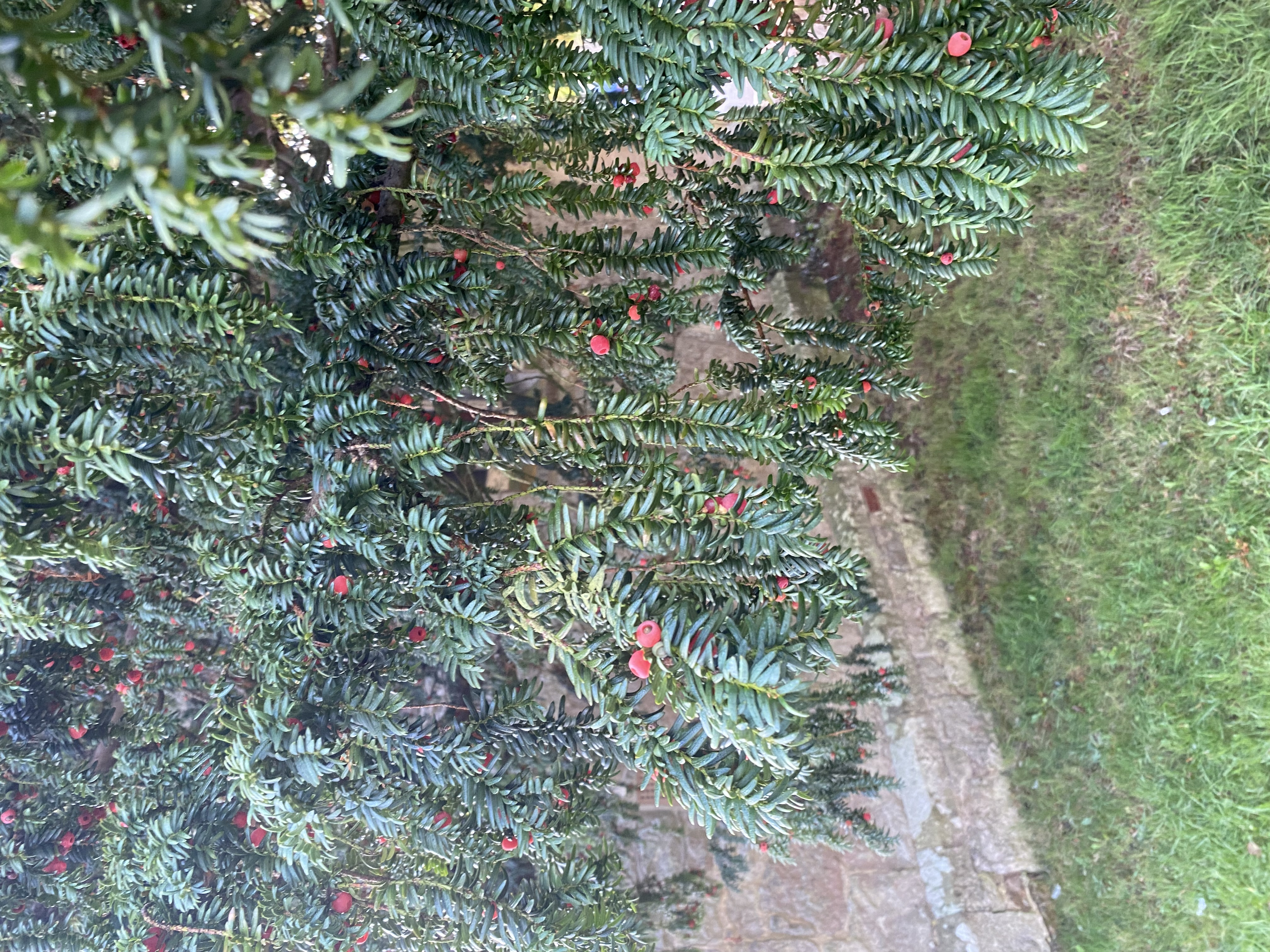
Yew
Taxus Baccata
Poisonous! Every bit of it - except the pithy bit (aril) around the seeds, but then the seeds are deadly so I wouldn’t risk it. Usually found at church entrances and linked to folklore and superstition.
Yew tree (Taxus baccata) poison biochemistry involves taxine alkaloids, particularly Taxine B, which act as calcium and sodium channel antagonists, disrupting heart function by increasing cytoplasmic calcium levels. These alkaloids cause cardiotoxicity, leading to symptoms like bradycardia, heart block, and potentially fatal cardiovascular collapse. While other substances like taxanes and glycosides are also present, taxine alkaloids are considered the primary toxic component, and are found in all parts of the plant except the red aril.
Toxic Components
Taxine Alkaloids: The main toxic compounds, including Taxine B, which is more potent than Taxine A.
Other Compounds: Also present are taxane derivatives and glycosides, though the alkaloids are the primary cause of cardiotoxicity.
Mechanism of Action
Sodium and Calcium Channel Antagonism: Taxine alkaloids block sodium and calcium channels in cardiac myocytes, which are the cells of the heart muscle.
Increased Cytoplasmic Calcium: This blockade leads to an accumulation of calcium within the heart cells, disrupting the heart's normal electrical and contractile functions.
Reduced Myocardial Contractility: The increased calcium impairs the ability of the heart to contract effectively.
Symptoms and Effects
Cardiovascular Effects: The most prominent effects are on the heart, including bradycardia (slow heart rate), atrioventricular (AV) conduction block, widened QRS complexes, and ventricular arrhythmias.
Other Symptoms: Initial symptoms can include dizziness, nausea, and vomiting, followed by neurological disturbances, paralysis, and ultimately, cardiovascular collapse.
Cardiovascular Collapse: Death often results from the failure of the cardiovascular system.